I am a graduate from Cornell University with completed course work in Biomedical Engineering and Biochemistry. My focus of study is the connection between protein structure and function and the creation of new therapies to treat diseases.
Science has always a passion for me and I have continued to explore the sciences through the interdisciplinary application of biomedical engineering and biochemistry. I chose to combine biomedical engineering and biochemistry due to my personal research into the biotechnology industry- particularly the pharmaceutical industry.
There are many questions surrounding the scope of different, distinct drug entities that can be developed to meet the world medicinal needs. This is provided by the fact that almost all drugs marketed have origins in 10 chemical scaffolds developed by medicinal chemists. The question of “how many more chemical structures to discover” remains a questions deserving a definition of what one means by “chemical structure.” Ligand based drug design is an area of interest that especially applies to me. In this method, knowledge of other molecules’ ability to bind to the target of interest lends information to what types of structures to explore and test on the target of interest. In other words, by knowing which molecules binds to a target, or related targets, tightly or not, it’s possible to modify these molecules until the desired affinity is achieved. The landscape of drug design/discovery is filled with a hope of much more to come. This hope roots itself on the idea that since most drugs have origin in a few entities, 10, could we not discover more entities? Nonetheless, the lack of new entity discovery, given the time and resources thus far placed in the activity of drug discovery, leads some to a pessimism. Further under current market considerations, the desire to risk real investigation to discover these revolutionary entities is held with much caution. Will these entities come? I believe they will. It’s only a matter of time before all pessimism is shadowed under a new wave of scientific ingenuity.
Due to these investigations and discoveries that there are very few drug entities, I decided to combine biomedical engineering with biochemistry in order to combine different fields of knowledge in an effort to create a new conceptual framework for applications into drug design. Since many drugs target proteins, I decided to focus particularly on proteins. I am an avid learner and I am always trying to gain new information on the development of drugs from scientific literature.
9/2020 - 12/2020
Researched mitral valve prolapse and mitral regurgitation and used a cardiovascular simulation software, Cardiosimalator, to model the two conditions. The aim of this project was to expore simulation software and compare the accuracy of the values produced by the simulator to experimentally determined values.
1/2020 - 5/2020
Researched a wearable respiration monitor and created a report that outlined the various pros and cons on the technology.
9/2020 - 12/2020
Modeled transcription and translation from genes encoded in DNA and the translation into proteins using differential equations in MATLAB. The differential equations that were obtained from an analysis of gene transcription repression and activation were inserted into MATLAB and a simulation of the behavior of the gene in the presence of certain protein was produced. It was confirmed that the models align with experimentally determined values.
9/2020 - 12/2020
Created a simulation of sheep trachea and visualized the deformation of the connective tissue and cartilage rings as a negative pressure was applied on the inner walls of the trachea. The aim of this project was to determine the feasibility of the values produced by an ANSYS simulation of a trachea when compared to experimentally determined physiological values.
1/2020 - 5/2020
Created a circuit design for a heart rate monitor on a breadboard using amplifiers and resistors. Piezoelectric sensors directly attached to the breadboard were used to measure the heart rate.
1/2023 - 5/2023
Purified beta-galactosidase using Ammonium Sulfate Fractionalization, Bradford Assay, Activity Assay, Dialysis, DEAE Cellulose Chramatography, SDS-PAGE, and Blue Native Page. The purpose for this project was to purify beta-galactosidase from a crude extract.
My passion and goal is to help change the world through the creation of new medical therapies.
I have extensive experience in performing research.
I have created many programs in MATLAB
I have experience in performing biochemical assays
I have been in involved in many laboratory experiments and I am well versed in the laboratory environment
I have perfomed market research into the biotechnology and pharmaceutical industry
I have been involved in many project in which computer programming using R, Python and ImageJ was involved.
Here are some of my selected works I have done. Feel free to check them out.
Thank you for visiting my page.
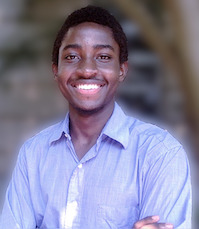 Joash Ogwoka
Engineer-Biochemist, Ithaca, NY
Joash Ogwoka
Engineer-Biochemist, Ithaca, NY
Thank you for visiting my page.
Joash Ogwoka
Engineer-Biochemist, Ithaca, NY
Thank you for visiting my page.
Joash Ogwoka
Engineer-Biochemist, Ithaca, NY
I'm happy to connect, listen and help. Let's work together and build something awesome. Let's turn ideas into something real. Email Me.


